
The Next Wave of Boating Apps - From Information to Intelligence

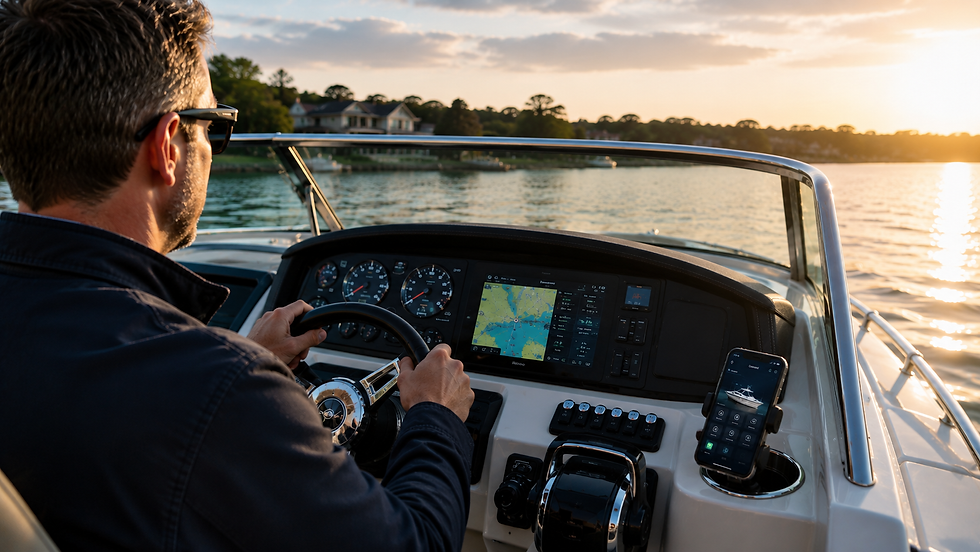
Your boat's next first mate might be an app.
I recently read an urban legend about a self-driving car in Texas. It went like this:
The intersection of self-driving cars and new AI technology collided in a story about a Tesla straight out of a science fiction movie. The legend centred around how technology had progressed to the point where a Tesla used it’s own diagnostic software to determine its own root faults. It could also discover its own failing routine maintenance items, order spare parts, and schedule service appointments with the local dealer. In this urban legend, the car ‘overheard’ its owner complaining that their car looked just like the hundreds of other Teslas in a parking lot. In response, and using its own internal computer systems, the Tesla ordered a new set of rims and tires - bright pink, no less - to differentiate itself in a way that would address the owner’s complaint. The next day, the car slipped into self-driving mode, drove to the dealership, waited patiently while the work was completed, and then returned to the parking lot where the owner was expecting to find the car.
The owner was left with a $2500 bill and a legendary story of the wonders of technology.
A fantastical story, or a cautionary tale? Is this where we want the marine industry to go?
Well….Yes.
But let me explain.
We’re not there yet, but we’ve come a long way. The early 2000s until the 2020s was characterized by app integration platform-by-platform. Each device had a separate app with very little integration. An app was used for navigation, device setup (a battery charger, trim tabs, or power poles), a particular instruction/user manual, and so on. Function and design was centred around moving from hand-held devices to phone use (think of a standalone small GPS display, or a handheld remote control for a trolling motor)
In more recent years, this has been streamlined to allow all products from a particular manufacturer to use one primary mobile app (i.e., a single app that includes navigation, manual resources, interaction with devices, and diagnostics). Handheld hardware devices have largely been replaced by mobile apps.
As it stands right now, modern marine apps fall into several categories:
Navigation: Route planning, charts, AIS vessel tracking, weather, tides, and anchor alarms.
Engine monitoring: Real-time RPM, fuel consumption, temperatures, battery voltage, fault codes, maintenance reminders, and trip logs.
Vessel monitoring: Some boats allow owners to check battery status, bilge pumps, location, geofencing, and security alerts from anywhere via cellular-connected telematics.
Maintenance: Digital service records, parts lookup, warranty information, and predictive maintenance based on engine hours and operating conditions.
Community features: Sharing routes, fishing hotspots, marina reservations, and trip planning.
In tech-speak, we’re past the early adoption phase and into the growth phase. If you aren’t already synchronizing your boat to your phone, 2026 might be your year to play with apps and integration to see what is right for you. This will put you in a position to be fully integrated as the decade turns and full integration becomes not only possible, but normalized.
Here’s what that might look like:
Marine engines mounted on boats will be fully integrated. The displays will resemble windshields more than multi-function displays and allow the operator to see complete engine data while underway. A technician will be able to type in a code to diagnose and qiuckly repair any issue that comes up. These windshield displays will assist with navigation judgements, vessel security, weather, and geofencing. As you approach the helm, the operators face will be scanned to unlock the controls and adjust the seats just the way he/she prefers them. A touchscreen will start the engines and can be used to set preferences. A text message, email, or phone call can be displayed on the windshield as the boat glides away from dock.
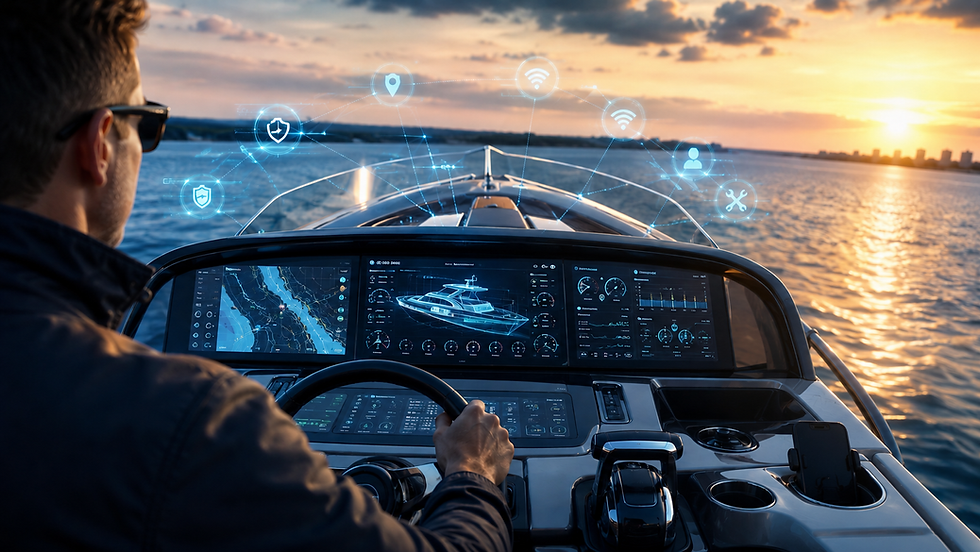
If the engine is due for a service interval, the system will track the hours, notify the dealer (who will order the parts required to complete the manufacturer recommended service), and book a service appointment. To complete the cycle, the dealer will arrange to pick-up and return the boat from the customer’s slip (using their back-end technician settings to gain access without a key). The boat may also track warnings and notices of battery charging, bilge water, trim tabs, or comfort-related settings. These same datasets are provided to the dealer to address during service visits or in the off-season.
We’re moving from apps that simply display information toward apps and systems that actively analyze, predict, and eventually assist with operating and maintaining boats.
Smartphones and all-in-one apps are increasingly becoming the primary interface for recreational boat owners, while more advanced on-board systems allow operators, dealers, and technicians to have easy access to system information.
What a wave we’re riding - get ready for the next swell!


Comments