
The 10 Things on Your Boat You Can't Afford to Lose
Modern recreational boats are more capable than ever. Digital chartplotters, integrated engine monitoring and sophisticated electrical systems have made boating easier.
But, as boats become increasingly designed around high-end technology, an important question becomes inevitable: what happens when these systems we rely on stop working?
A dead battery, failed engine, damaged propeller, or loss of power can turn an otherwise routine outing into a challenging situation. Transport Canada claims more than 50% of calls for assistance from recreational boaters are related to mechanical failure. In other words, more than half of rescue calls are due to boat failure, not operator error.
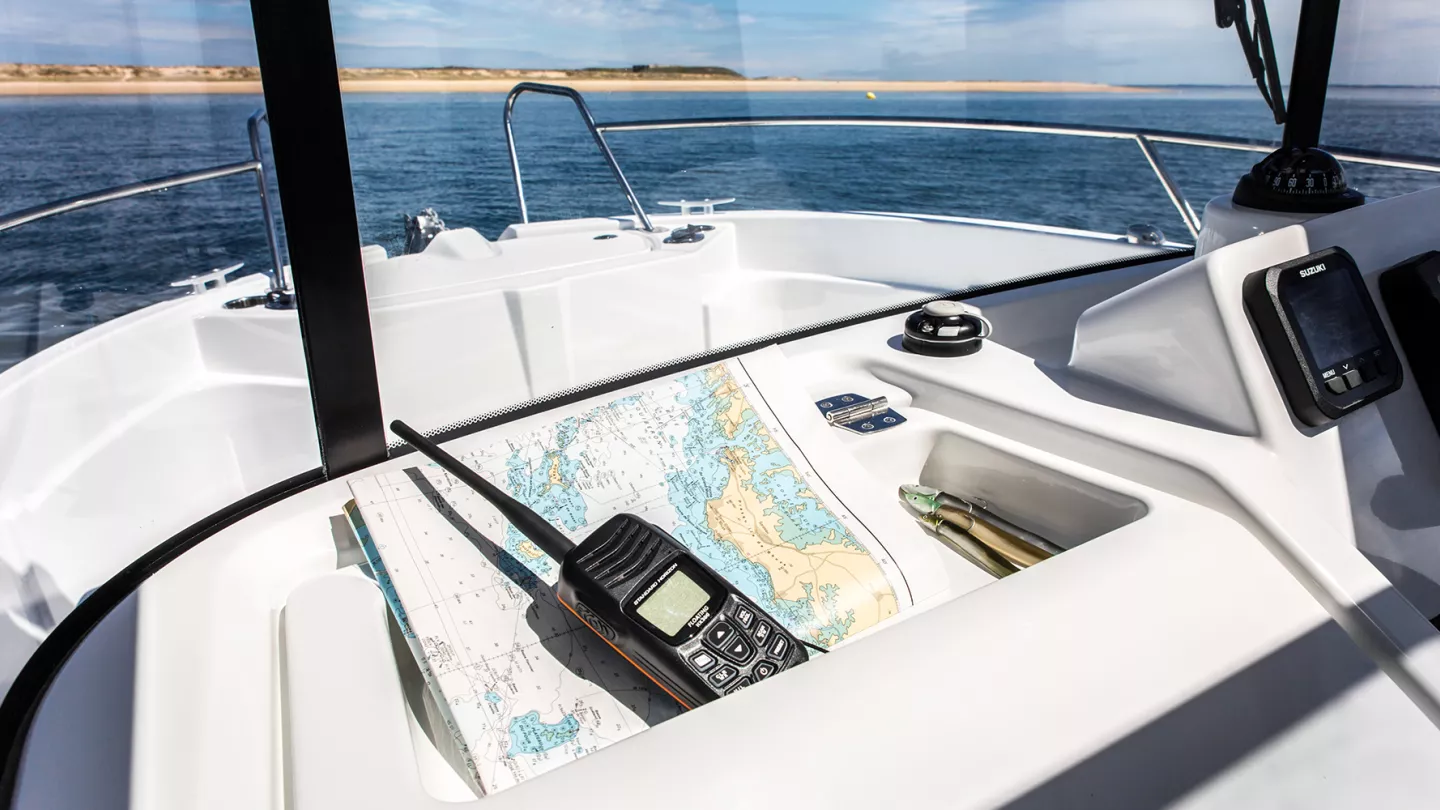
That's where redundancy comes in. In safety planning, redundancy means having an alternative way to maintain a critical function when the primary system fails. That might mean a handheld VHF radio when the helm-mounted unit loses power, or using paper charts when the chartplotter shorts out, or a manual pump when an electric bilge pump stops working.
But not every system can be duplicated. Sometimes the best backup is an alternative method. In other cases, it's a contingency plan that helps prevent a manageable problem from becoming an emergency. The key is ensuring that the alternative is available when the primary system fails. This is particularly important during the shoulder seasons, when cold water, shorter days and changing weather can leave less room for error.
Here are 10 critical systems and pieces of equipment to consider when building a practical redundancy plan for your boat.
1. VHF Radio
A marine VHF radio provides a direct means of communicating with other vessels and, where coverage is available, to a nearby Coast Guard or emergency services unit. Unlike a conventional phone call, a distress transmission can be heard by nearby vessels as well as the appropriate shore-based station, potentially bringing assistance from more than one source. A properly maintained fixed-mount radio is valuable, but a charged handheld VHF provides another option if the boat loses electrical power or the primary radio becomes inoperable.
(You might also like: To VHF or Not to VHF)
2. Mobile Phone
Like #1, A mobile phone is an important secondary communications tool because it gives access to emergency services, weather forecasts, and other handy information when cellular coverage is available. It can also be a lifeline if the electrical system on your boat fails. It's also not a complete failsafe like a VHF radio can be—cell phone coverage can disappear when traveling away from populated shorelines, and a phone call does not provide the same broadcast capability as a VHF distress transmission. But, as a backup, keep the phone charged and protected in a waterproof case, and consider a portable power bank to extend its battery life if the boat's electrical system fails.
3. GPS, Chartplotter and Paper Charts
Electronic navigation systems are the norm now. They provide a wealth of information, from vessel position and course to depth readings and nearby hazards, but they depend on functioning equipment and, in most cases, a reliable power supply. A dedicated GPS receiver or a second navigation device can provide useful redundancy, but boaters should also understand how to navigate without their primary chartplotter. It's always wise to carry up-to-date paper charts for the waters you're boating. In fact, in some places it's the law. You should also know how to interpret them. And on that note—a chart stored on a phone or tablet is still vulnerable to battery failure, water damage, and other electronic problems. Keep paper copies that are laminated or in a waterproof case.
(You might also like: A Compass is More Than a Navigation Tool - Here Are Some Other Tricks It Can Do)
4. Anchor
This may seem like an odd choice, but an anchor is more than a way to stop for lunch or spend the night in a quiet bay. It can also be a critical backup when propulsion fails. If an engine dies, an appropriately sized anchor and sufficient rode may help prevent the boat from drifting into rocks, shoals, or other hazards while the captain assesses the situation or calls for assistance. Boaters should ensure their anchor is suitable for the bottom conditions they are likely to encounter, that the rode is in good condition, and that the anchor can be deployed without relying on powered equipment.
(You might also like: Anchoring Done Right: Why Most Boats Drag (And How to Fix It))
5. Spare Fuel and Fuel Management
Running out of fuel remains is a preventable cause of boating emergencies, particularly when changing weather or unexpected detours extend a trip. Transport Canada recommends allocating one-third of the available fuel for the outbound journey, one-third for the return, and one-third as a reserve. Beyond that guideline, boaters should monitor their consumption constantly, learn their boat's range, and carry additional fuel (provided it can be stored and transported safely in the proper container aboard your vessel).
(You might also like: Cut Your Fuel Burn In Half)
6. Battery and Electrical Power
On many modern boats, a single battery or electrical-system failure can disable multiple systems at once, potentially affecting engine starting, navigation displays, communications, and lighting. A properly installed and maintained secondary battery, where appropriate for the boat's wiring and configuration, can help isolate essential loads from house systems and provide an alternative source of power. Boaters should understand how their battery banks are configured, monitor battery condition and know which equipment will remain operational if the primary electrical supply fails.
(You might also like: Boat Battery Basics - Construction, Applications, Wiring Setups, & Maintenance)
7. Navigation Lights
Navigation lights are essential when operating between sunset and sunrise and during periods of restricted visibility. They are critical to helping other vessels determine your boat's position and direction of travel. A lighting failure caused by a dead battery, blown fuse, or damaged wiring can make a vessel much harder to see, so operators should inspect the lights before departure and understand how to troubleshoot basic electrical problems. A suitable waterproof flashlight and spare batteries provide useful backup illumination, although they do not automatically replace the navigation lights required by many maritime regulations. Understand your navigation lights and how they work, but also have a redundancy plan in case of an unexpected failure.
(You might also like: #QuickTips Boating at Night)
8. Bilge Pump
An automatic bilge pump can help remove water that accumulates inside a boat, but it cannot compensate indefinitely if there's a major leak or a mechanical failure. A failed float switch, clogged intake, blown fuse, or depleted battery can all leave a vessel vulnerable to a bilge pump failure. Depending on the boat, having a secondary pump, a manual pump kept with the safety equipment, or an appropriate bailer on a small vessel provide extra protection if the primary system fails. Captains should also know where water is likely to enter on their vessel, how to access those areas, and how to shut off the source if possible.
(You might also like: Why Every Boat Needs A Bilge Sock)
9. Emergency Signalling Equipment
If a boat becomes disabled, attracting attention can be just as important as knowing your position relative to the nearest boater or shoreline. Depending on the vessel and the operating area, emergency signalling could involve visual distress signals, a sound-signalling device, a waterproof flashlight, a personal locator beacon, or an emergency position-indicating radio beacon (EPIRB). These devices serve different purposes and are subject to different requirements, but redundancy means having more than one means of solving an issue. Boaters should verify the signaling equipment required for their vessel, understand how to operate it, and check expiry dates and battery condition before heading out. (You might also like: An Easier and Less Expensive Way to Stay Safe)
10. Propulsion
Engine failure is one of the most obvious examples of why redundancy matters, but a backup plan usually doesn't allow for carrying a second engine. Depending on your vessel, your propulsion safety plan might include carrying basic tools and appropriate spare parts, understanding how to identify common engine problems, and knowing how to secure the boat if propulsion is lost. You may need to rely on immediate mechanical skills, finding a way to anchor up, or start communications and assistance from another vessel. The important thing is to have a plan before a mechanical problem occurs.
(You might also like: Diagnosing Boat Engine Problems by Sound: What Your Engine Is Telling You)
Modern electronics have transformed recreational boating, improved navigation, and give operators a host of valuable safety information, but they're still no substitute for good captaincy. Convenience can sometimes come at the expense of traditional skills, which provides all the more reason to understand how to respond when technology fails.
Redundancy is more than simply carrying spare equipment. The goal is not to anticipate every possible failure and equip every boat like an expedition vessel. The goal is to identify the systems that matter most, understand how their failure could affect the boat and its occupants, and establish practical alternatives. That way, when a failure happens (and if you're a boater you know it's going to happen), you already have a plan in place to manage the risk.


