
Anchoring Done Right: Why Most Boats Drag (And How to Fix It)

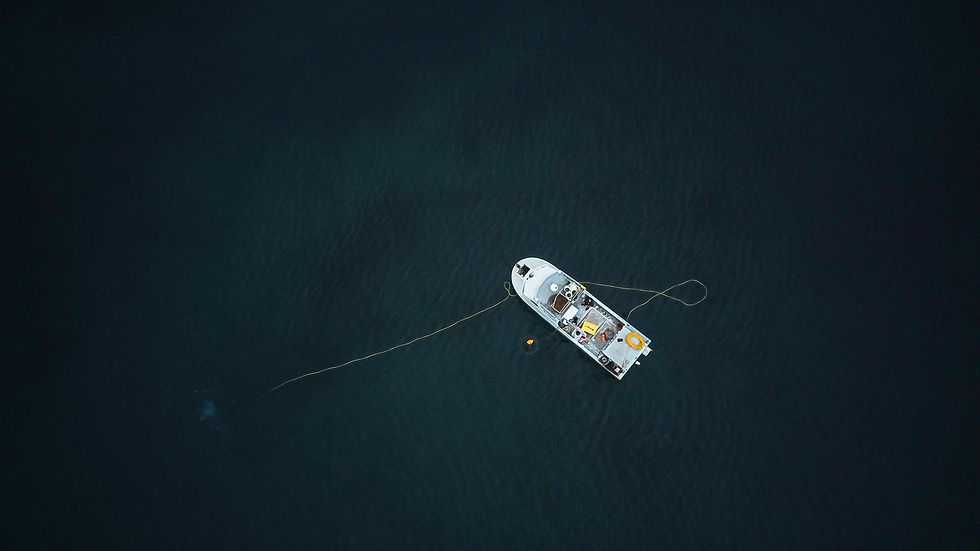
Ask a group of boaters if they know how to anchor, and nearly all will say yes. Watch them do it, and you’ll quickly realize why so many boats end up drifting.
Anchoring isn’t complicated, but doing it properly requires understanding a few key principles that are often overlooked.
The biggest mistake? Not using enough scope.

Scope refers to the ratio of anchor line deployed to the depth of the water. A common rule is 5:1 for calm conditions and 7:1 or more for windy or harsh conditions. Depending on your waterway and the conditions, even 3:1 can be necessary. Using the common 5:1 or 7:1 standard, that means if you’re in 10 feet of water, you should have at least 50–70 feet of rode out. You must also factor in the additional height from the surface of the water to the anchor bow height of the boat. Most boaters use inadequate rode for the boat and conditions — and that’s the number one reason anchors fail to hold.
Equally important is how the anchor is set. Dropping it overboard and drifting back usually isn’t enough. Once you’ve let out sufficient line, you need to gently reverse to dig the anchor into the bottom. Or, depending on the water conditions, you may drift or ride the current to achieve this. You should feel it bite. If you don’t, it’s not set.
The bottom also matters more than many realize. Sand and mud provide excellent holding, or bite. Rock and weeds? Not so much. A fluke anchor might perform adequately in sand but struggle on a grassy bottom. Matching your anchor type to where you boat is critical. This is where you should take the time to learn the physics of different anchor types.

Another common issue is improper or poor positioning. Boaters often anchor too close to other boats, or to hazards, without considering the boat's swing radius. Remember: your boat will rotate around the anchor as wind or current shifts. That means the space you need isn’t just where you drop — it’s a full circle around that point. This can be particularly relevant if you're using a mooring buoy for overnighting. Mooring buoys are often placed in open water, and there are often multiple buoys set in a row. If there's any wind or current, you're responsible for your swing radius. Larger boats and cruisers should also consider running two lines with a mooring buoy as a redundancy given their boat's large size and weight.

There’s also a misconception that heavier anchors can solve any anchoring issue. In reality, technique matters more than weight. A properly set, appropriately sized anchor with correct scope will outperform a heavier anchor used poorly every time.
One simple habit separates experienced boaters from everyone else: they check their position after anchoring. Whether it’s lining up landmarks on shore or glancing at a GPS track, confirming you’re not moving is essential. If you're expecting some movement, make sure you know your scope, your swing radius, and any hazards or other boats nearby.
Dragging anchor isn’t just inconvenient — it’s how boats end up on shoals, docks, or running into each other. Know your scope. #tips #quicktips


Comments