
Bad Gas, Watered-Down Fuel, and Ethanol: The Root of Common Fuel Issues

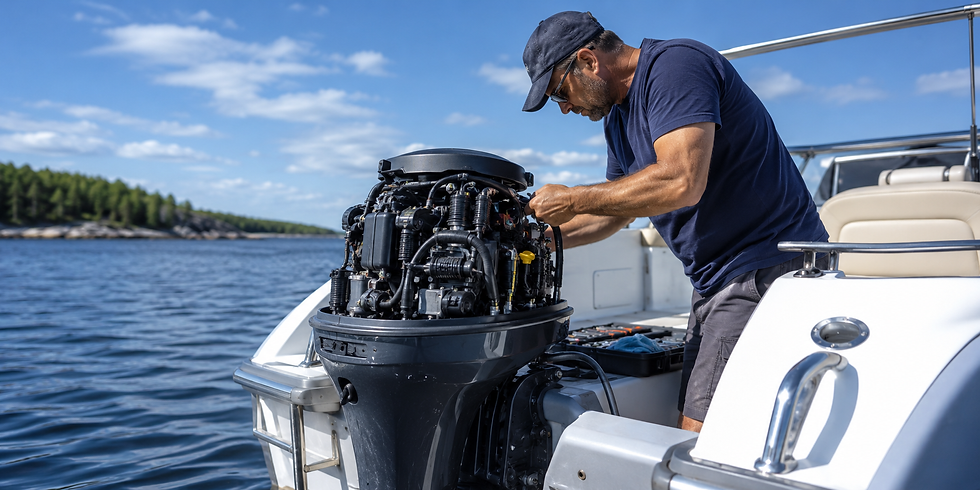
Despite how complicated you think your internal combustion engine might be, it can really be boiled down three elements.
If all three elements are present, the engine will run indefinitely. If one of the elements is missing, the engine either won’t start or will stop running. When a marine mechanic starts diagnosing an engine with runnability issues, they will look at these three things first:
Spark: Its got to have a controlled explosion to make the pistons move the and the crankshaft turn. In a gas engine, this comes from a spark plug. In a diesel engine, the ‘spark’ comes from compressing fuel until the temperature rises and it ignites.
Compression: It has to be able to keep the explosions controlled. The right amount of air and fuel, in the right spots, held in a compressed state.
Fuel: Its got to have something to burn. Gasoline, diesel, hydrogen, kerosene, propane. Outboard, inboard, sterndrive. They all need fuel, and the fuel has to be metered and delivered at the right place at the right rate.
By far, the most common repair on marine engines today has to do with fuel. Fuel has a shelf life. We don’t often notice this in the cars that we drive every day, because it’s generally assumed that we’ll burn through a tank of gas before it goes bad. There are three main problems with gasoline sitting for long periods:
Modern gasoline contains ethanol – an alcohol that is added (up to 15%) in order to have cleaner emissions. Ethanol isn’t a bad thing, in general. It does its job in reducing emissions. But, in a marine engine it gets tricky: as an alcohol, ethanol can damage rubber and plastic components, including seals, gaskets, and fuel lines. Ethanol is also an ‘octane booster.' When you fuel at the gas pump, you’re choosing an octane level (meaning the ability of the fuel to ignite. Higher octane = easier to burn).

As temperatures fluctuate through an annual cycle, condensation builds up inside fuel tanks. The condensation builds on the sides of the fuel tank and then runs into the fuel, watering it down. To make matters worse, water and ethanol chemically attract each other. Whenever water is present in fuel, the ethanol molecules in the fuel are attracted to it and will separate from the gas and join with the water molecules. These new molecules are heavier than the gas around it, and will drop to the bottom of the fuel tank. Because ethanol is an octane booster, this separation from the fuel also lowers the octane. If you filled up 87 octane at the pump, when the ethanol separates the fuel that is left may end up only being 85 octane, which is not enough for the engine to start or run properly.
Fuel goes bad. After long periods of time, fuel degrades into a gel. This gel can gum up injectors, carburetors, and spark plugs. Unless the gel is manually cleaned out, fuel can’t be delivered effectively to the engine.
Diesel, being another popular fuel source for boats, has similar issues:
1) The condensation problem remains the same for all fuel types: Condensation builds on the inner walls of a fuel tank as external temperatures fluctuate. This condensation drips into the fuel, watering it down.
2) Diesel fuel doesn’t break down into gel the same way that gasoline does. But, it is the perfect growth medium for certain organisms. Microorganisms, sometimes referred to as "diesel bugs," grow inside the fuel and can effectively clog up fuel lines, fittings, and injectors. They are made of bacteria, fungi, or microbes and can live at the boundary between water and fuel.
So how do we, as seasonal marine engine users, deal with all of this? We need to balance two opposing interests:
Condensation can’t build up and water fuel down if the tank is full. Less surface area on the walls of the tank means less worry about watered-down-fuel
Fuel goes bad. If a full tank is left for too long, the fuel could become stale, making it unusable and a waste of good money.
Here’s the strategy: Protect the fuel that you have, and remove the impurities.
To protect the fuel that you have, use some additives:
1) Biocide. This is the ideal additive for diesel fuel to keep the growth of organisms in check. This is especially important to add as part of a winterizing or lay-up strategy.
2) Fuel stabilizer. This is an additive to prevent gasoline from breaking down into gel. Important to add and run through the engine as part of winterizing. Fuel that has been stablized should be run through the carburetor, injectors, and past spark plugs so that any fuel left behind won’t gum up and cause damage to the tiny passages that are needed for good fuel flow.
3) Injector cleaners. This additive will help to clean any gum building up and add some lubrication to small passageways in injectors and carburetors. A great idea to add this as part of a routine maintenance plan.
4) Octane boosters. Only for gasoline engines, this will aid in combatting the ethanol/octane problem.
Next: Buy good fuel. Try to choose fuel with little or no ethanol. If you’re filling up at a standard gas station, find the grade with 0% ethanol if it's available. Most marina fuel stations will have ethanol free fuel available. Also, select premium fuel with high octane whenever possible. If octane is lost over time, your engine will still be able to run, despite any octane lost.
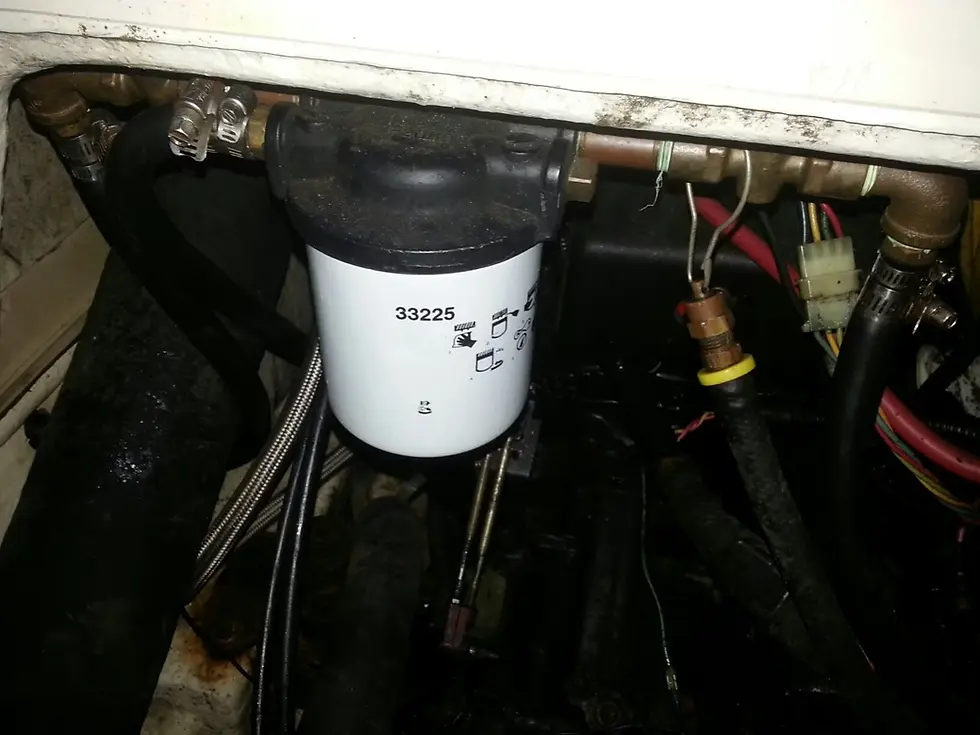
Finally: in order to keep your engine running well, the fuel has to be of high quality. No matter the source, the octane level, and the additives within it, the fuel will be sitting inside a tank where condensation can build and where debris, dirt, and sludge can collect. Then it will be sloshed around inside the tank as the boat moves through the water. Then it will be pressurized and forced through fuel lines, shut-off valves, carburetors, injectors and finally into the engine itself. Your engine will run best when the fuel that arrives at the engine is as clean and pure as possible. Your last line of defence is the use of a fuel filter.
There are many types of filters available. The simplest, and the type that I always recommend, is a spin-on style (like an oil filter) that has an internal structure that will collect and remove debris while also separating water from the fuel that runs through it.
The key with this style of filter is to ensure that the spin-on filter is replaced regularly. If water builds up inside, it will make its way to your engine. If water is left inside the filter in the fall, it could freeze over the winter, causing issues in the spring. I recommend changing the filter either every 100 hours, or annually (in the fall) for best performance.
If you engine doesn’t have a fuel filter installed (in line between the fuel tank and the engine), your friendly neighbourhood marine mechanic can install one fairly easily.
Safe travels!


Comments