
How to Rig Your PWC for Fishing: 6 Accessories Worth Adding to a Stock Machine

By: Ved Patel

There is a whole class of PWC owner who has never considered fishing from their machine but probably should. You already own the machine. You are already on the water. The spots you can reach on a PWC, the shallow flats, the back channels, the rocky points that a full size boat can't touch without scraping its hull, are exactly the kinds of places that produce fish. The only thing standing between a fun ride and a productive day of fishing is a handful of accessories.
You do not need to buy a dedicated fishing model. Sea-Doo's Fish Pro, Kawasaki's Ultra 160LX Angler, and Yamaha's fishing packages are genuinely impressive, but they also carry a price tag to match. For the rider who wants to dip into PWC fishing without committing to a whole new machine, adding a few well chosen accessories to a stock machine is a smarter starting point. Here is what actually makes the difference.
1) A Rear Rack and Cooler Combo

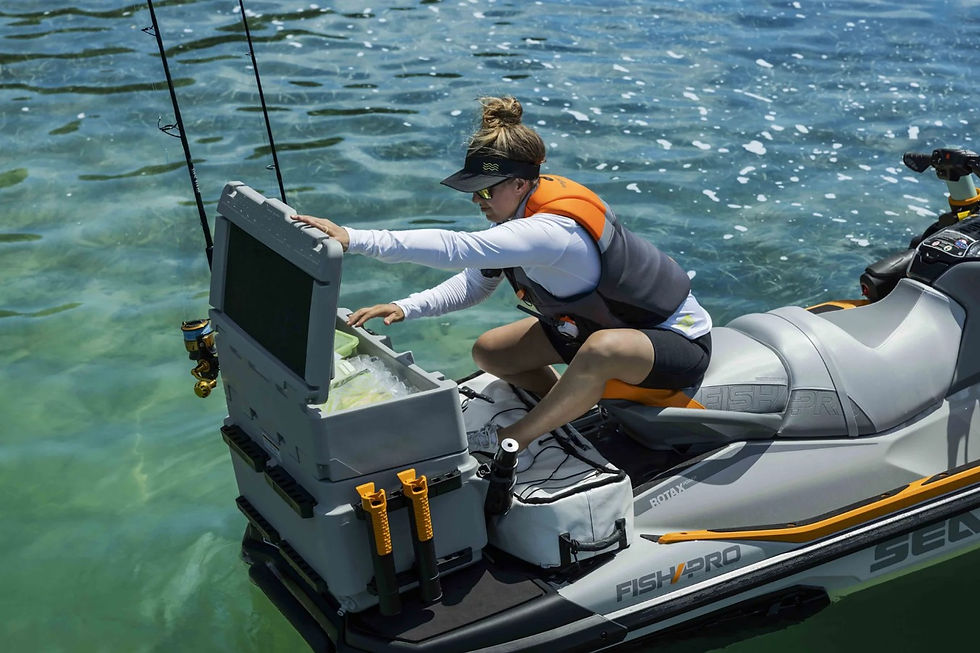
This is the foundation of any fishing setup. Without a rear rack you have nowhere to put anything, and everything on a PWC needs to be secured or it ends up in the water. A good rack mounts to the rear platform of the machine and gives you a stable base for a cooler, a dry bag, or a tackle box. Most aftermarket options are built from marine grade aluminum or stainless steel and are designed to fit specific model lines, so the fit is generally solid.
Brands like PWC Super Rack, ExtremeMax, and Jet Tech all make popular options. If you're on a Sea-Doo with the LinQ system, Sea-Doo's own accessories mount directly to the rear deck without needing a separate rack structure. Many combos come with rod holders already built in, which solves the next problem before you even get to it.
The cooler matters too. A 48 to 55 quart cooler keeps bait alive, catch fresh, and drinks cold through a full day on the water. YETI's Hopper series and similar soft coolers strap down well and take up less volume than hard sided options if space is a concern.
2) Rod Holders

Photo - JetTech 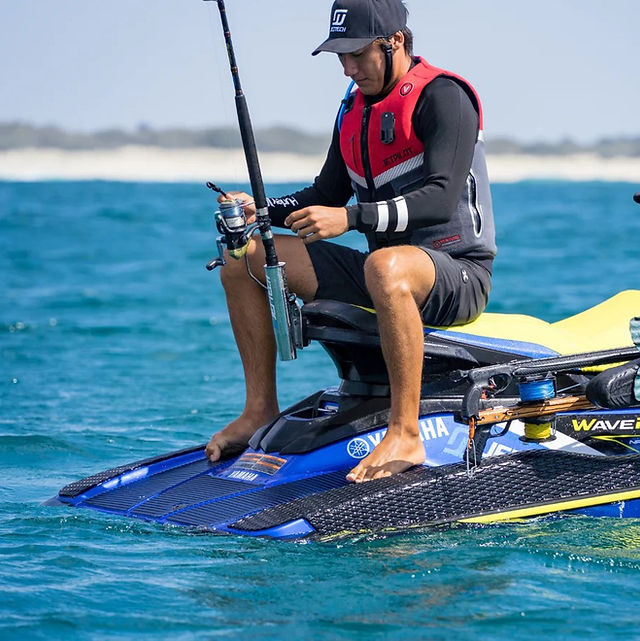
Photo - JetTech 
Photo - JetTech
Fishing from a moving PWC with rods in your hands is not a workable situation. Rod holders are not optional. They keep gear secure while you're running from spot to spot, free your hands for handling fish when something bites, and generally keep the whole setup from feeling like a balancing act.
Most rear rack combos include two to four built in holders, which is enough for casual use. For a more involved setup, Fishmaster makes front and rear arches from 1.90 inch aluminum tubing that mount like a wakeboard tower and can hold several rods plus electronics. They fold down for trailering and can be removed entirely when you want the PWC back to its original form. It takes about two hours to install and the result looks properly rigged rather than improvised.
RAM mounting systems are another option worth knowing about. They use a universal ball and socket design that lets you position rod holders, electronics, and other accessories almost anywhere on the platform with no permanent drilling required.
3) A GPS and Fishfinder

This is where the setup crosses from casual to serious, and it is also the biggest single spend on this list. That said, a combined GPS and fishfinder unit earns its cost faster than almost anything else here. It shows you where the fish are holding, marks productive spots so you can return to them, and keeps you from getting disoriented in open water or fog. On a PWC where you are covering a lot of ground quickly, that navigation piece alone justifies the purchase.

Garmin's EchoMap series is one of the most commonly mounted units on fishing PWCs. The 7 inch version delivers clear sonar, full charting, and GPS in a package that fits cleanly in front of the handlebars without blocking sightlines. Lowrance also has a strong following in the PWC fishing community. Entry level units from both brands start around three to four hundred dollars, and mid range options with better sonar resolution sit in the five to seven hundred range. Either way you are getting a tool that a dedicated fishing boat would carry regardless of price point.
One thing worth planning for if you are adding electronics: your stock battery may not comfortably handle the additional draw, especially if you are also running lights or a VHF radio. A second deep cycle battery wired through a battery selector switch is the proper solution. It gives you a dedicated electronics battery and keeps your starting battery protected.
4) A Waterproof Tackle Storage Solution

A PWC does not have a dry compartment that can hold a full tackle box without risk, and most of the built in storage on a stock unit is not intended for gear that would be ruined by getting soaked. You need a purpose built solution, and this is one of the areas where you can spend very little and still solve the problem completely.

A waterproof dry bag with a roll top closure runs between twenty and fifty dollars and handles soft plastics, leaders, spare line, and anything else that gets destroyed by water. That is genuinely all most casual fishing riders need. For a more complete setup, an aluminum fishing crate or marine grade tackle box that locks onto the rear rack keeps harder gear like jigs, hooks, and tools organized and accessible. The Jet Tech Adventure Fish Box is a popular all in one that combines a cooler, four rod holders, a tackle compartment, and mounts for 5 liter fuel cans in a single unit. It costs more but it also replaces three separate purchases, so the math usually works out.
5) Stabilizer Floats or Sponsons

A regular PWC is not the most stable platform when you are sitting still and fighting a fish. That is just the reality. Stabilizer kits, sometimes called collars or fishing pods, attach to the sides of the machine and dramatically reduce the tendency to tip when you shift your weight around. Whether this one is worth the spend depends entirely on how you plan to fish.
If you are casting from the seat and not leaning hard over the rail, you may never feel like you need them. In that case, skip it for now and put the money toward a better fishfinder. But if you are planning on big water, offshore runs, or seriously fighting larger fish from a standing position, stabilizers pay for themselves fast. DockitJet makes inflatable kits that pack down small, install without modifying the hull, and make a noticeable difference in how settled the machine feels at rest. Kommander Fishing Pods are a fiberglass alternative with built in storage on each float, which effectively adds gear space and stability in one shot.
6) A VHF Radio

This one is less about fishing performance and more about not being stranded. A PWC has a small fuel tank and operates in conditions where things can go wrong quickly. A handheld VHF marine radio weighs almost nothing, costs under a hundred dollars, and gives you a direct line to the coast guard and other vessels if you need it.
For a more permanent setup, a hard wired VHF with a flush mount on the front arch or handlebars keeps the radio accessible at all times. Some setups, including builds popularized by well known PWC fishing enthusiasts and YouTubers, have gone as far as integrating satellite radio and marine speakers into the rig, turning the PWC into a genuinely capable offshore platform.
At minimum, a handheld VHF in a waterproof case clipped to your PFD is a habit worth building before you start running to distant spots.
The Bigger Picture
The appeal of PWC fishing is not that it replaces a proper fishing boat. It doesn't. What it does is open up a completely different kind of fishing experience: faster, more agile, able to get into places no boat can follow, and significantly cheaper to run for a day on the water.


Comments