
Five Lesser-Known Boating Traditions That Still Live On Today

Updated: May 1
By: Manhoor Irfan

Spend enough time around docks and marinas, and you'll quickly learn that boating culture runs deep with tradition.
Most boaters are already familiar with the famous nautical superstitions, never bring bananas onboard, never whistle into the wind, always treat the sea with respect. These customs have circulated among sailors for centuries and remain a cornerstone of maritime folklore today.
But, beyond those well-worn customs lies a fascinating collection of lesser-known traditions. Some began as practical habits among working sailors. Others grew from mythology, or simply from the tight-knit bonds that form among people who spend their lives on the water. Here are five lesser-known boating traditions that still echo through maritime history today.
1) Burning Socks to Welcome Boating Season

For many boaters along the U.S. East Coast, spring doesn't officially begin until the socks burn.
Celebrated around the spring equinox, this quirky tradition sees sailors ceremonially toss their winter socks into a bonfire to mark the start of boating season. The idea is simple: once the weather warms and the boats return to the water, socks are no longer needed, only boat shoes and sunshine.
The ritual reportedly traces back to 1977 in Annapolis, when boatbuilder Bob Turner jokingly burned his winter socks after a particularly long, cold season. The idea caught on. Today, marinas and boating communities up and down the coast hold organized "sock burning" gatherings each spring. What started as a humorous gesture has evolved into a symbolic kickoff to the summer season, a collective reminder that the long months of winter maintenance are finally behind you.
2) Ship’s Cats: The Sailor’s Lucky Companion

Long before modern pest control or electronic navigation systems, sailors relied on an unlikely crewmember: the ship's cat.
Cats were kept aboard ships primarily to control the rodents that threatened food supplies and cargo. Over time, though, sailors began to view them as far more than pest control. Many believed cats possessed a kind of mystical awareness, an ability to sense weather changes and warn of approaching storms. Because of this, they were considered good-luck guardians of the boat. Keeping the cat happy was thought to ensure safe voyages; while harming one was believed to invite terrible misfortune.
Today the tradition survives mostly as maritime folklore, but stories of famous ship's cats and dockside feline mascots still circulate warmly through boating communities.
3) The Scottish “Crew Baptism”
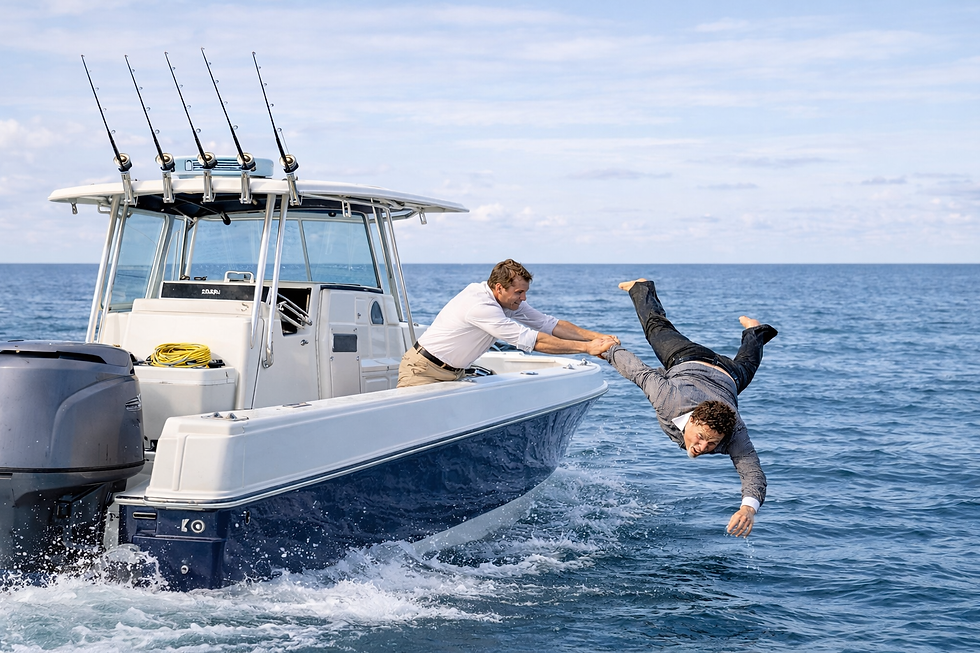
Not every boating tradition was about luck. Some were simply about camaraderie.
Among Scottish fishing crews, a long-standing ritual involved throwing a crew member into the water at the start of a fishing session. The person would be hauled back aboard, symbolically beginning the voyage. This ritual was intended to bring good luck and ensure a high volume of fish were caught. By modern standards it sounds rough, but at the time it was seen as a playful initiation, a way to build trust and solidarity among the crew. Maritime folklore also held that starting a trip this way could help bring a successful catch.
Today the tradition survives mostly as a historical curiosity, but it speaks to something that hasn't changed at all: the tight-knit culture that forms among people who work, and celebrate, together on the water.
4) Never Turn Bread Upside Down

Some maritime traditions are surprisingly simple, and surprisingly persistent.
One long-standing belief among sailors held that turning a loaf of bread upside down after cutting it would bring bad luck to the voyage. The superstition was common both at sea and on land, with roots traced back to France, a reminder of how everyday habits often carried deep symbolic weight.
The origins are debated, but historians suggest it likely tied to the reverence for food during long sea journeys. Bread was a vital staple aboard ships, and mishandling it, even symbolically, carried real consequences when supplies were scarce. Practical necessity or pure superstition, the tradition reflects how small rituals could carry enormous meaning in maritime life.
5) Never Rename a Boat Without Ceremony

Perhaps the most enduring maritime tradition of all involves the naming of boats.
According to ancient nautical folklore, every vessel's name was recorded in the "Ledger of the Deep" a mythical record kept by Poseidon, the Greek god of the sea. Changing a boat's name without properly removing the original from the ledger was believed to invite the god's wrath and doom the voyage. To guard against this, sailors developed elaborate renaming ceremonies designed to respectfully erase the old name and formally introduce the new one, typically involving champagne, ritual wording, and a proper christening of the vessel.
Even today, many boat owners remain surprisingly cautious about skipping the ceremony. Some traditions, it seems, are too important to take chances with.
Boating culture has always been carried forward through stories, passed from captain to crew, from marina neighbour to weekend sailor. Some traditions began as practical habits. Others were born from superstition, mythology, or the simple human need to mark a moment as meaningful. Together, they form a living history that connects modern boaters to centuries of life on the water.



Comments