
5 Things Boat Owners Should Do Before Summer Ends


For most boaters in Canada and the northern United States, the end of August marks a turning point.
There is still plenty of boating season left, but the calendar is beginning to work against us. You can see it in the weather, but you can feel it in the air at the marina, and, try as you might, you know deep down the curtains are starting to drop. That being said, September can deliver some of the best boating weather of the year. But by October, however, the days start getting shorter, the colder temperatures set in, and the end of the season appears on the horizon (unless you're one of the hardcores, in which case we salute you).
That means right now is the ideal time to take stock of your vessel.
Instead of waiting until haul-out day to discover a worn trailer tire, a dying battery, or a seriously overdue engine service, there are several tasks boat owners should address right now while your boat is still in use and before service departments become overwhelmed with winterizations.
Here are five things worth doing before summer ends.
1. Start Fixing the Small Issues You Racked Up All Season

Most boats develop a list of small issues over the course of a season. That's just the regular wear and tear of boating.
A navigation light starts shorting out. A bilge pump becomes intermittent. A crinkle in the vinyl of your seat finally turns into a tear. A gauge at the helm starts displaying strange readings. A trailer light conks out. A hatch finally springs a leak. The steering feels a little looser than you remember from the spring.
Individually, none of these necessarily prevents a boat from being used. That's why they tend to get ignored. But now that it's late summer, it's your chance to address them.
Transport Canada's recreational boating guidance recommends inspecting a pleasure craft's hull, electrical, fuel, propulsion and cooling systems, along with the throttle, steering, oil, fuel levels, hoses, lines, clamps and belts at least once per year. Most boaters do it in the spring, but now is the time to doublecheck your spring checklist. According to Transport Canada, more than 50% of calls for assistance from recreational boaters are related to mechanical failure.
Walk around the boat and make a list of everything that isn't working exactly as it should. Then fix the items that can be dealt with before the boat is put away. Even better, fix as much as you can yourself (if you have the know-how) to save yourself a service bill.
There's another practical reason to do it before winterization: your boat is still accessible.
If a problem requires a marine technician, getting it diagnosed in August or September may be considerably easier than discovering it in the spring when service departments are racing with the backlog of boats trying to launch for the season.
2. Inspect the Trailer Before You Hit the Highway

For small vessel owners, your trailer deserves almost as much attention as your boat.
A trailer might sit unnoticed for most of the year, but when it's suddenly be asked to carry several thousand pounds down a highway at 100 km/h, that's when surprises tend to pop up.
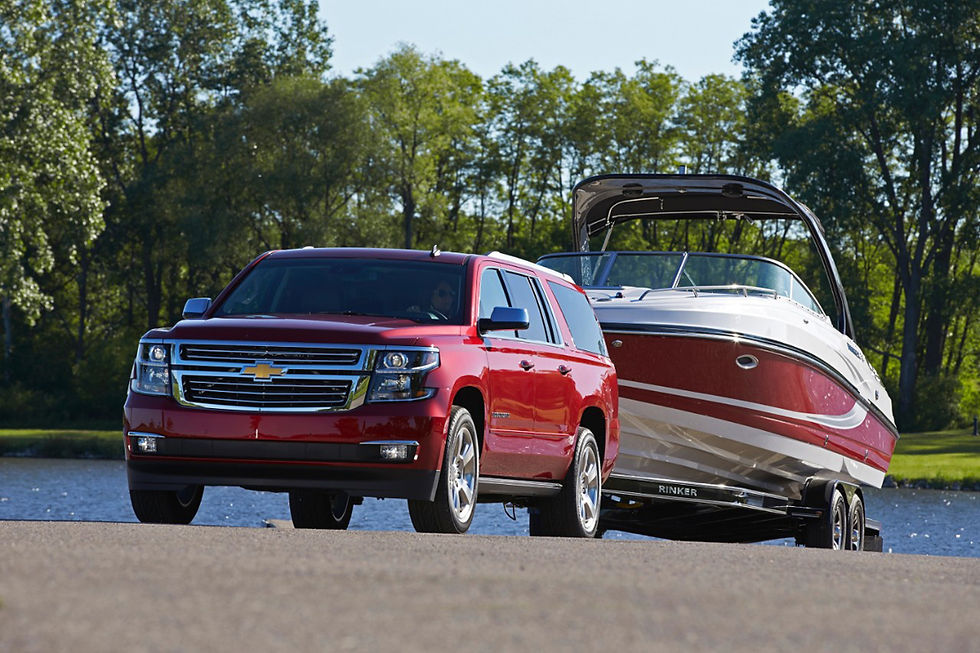
Before your next long-distance boating trip, or your end-of-season haul out, inspect the tires for cracking, uneven wear, and signs of damage. Check tire pressure, wheel bearings, brakes, lights, wiring, rollers or bunks, winch strap, safety chains and the hitch connection.
For some perspective, the trailer market is a significant part of recreational boating. The National Marine Manufacturers Association recorded 198,452 new boat trailers sold in the U.S. in 2025. In other words, the majority of readers likely own a trailer for their boat. If you do, heed this advice.
A trailer inspection is especially worthwhile if your boat spends much of its season in-water, leaving your trailer to sit idle and face the weather.
The tires may look fine while parked at the marina or in your driveway, but age, UV exposure, weathering, and heat can all contribute to tire issues. Wheel bearings and brake components can also deteriorate without being obvious. And when they go, you'll be parked on the side of the highway with an even bigger problem on your hands.
Take the late summer opportunity to check your trailer's registration and safety equipment, too. If you do experience a tire failure while underway, it won't be much help if your inflator or patch kit is busted or missing.
And don't forget the spare tire. A spare that has been bolted onto the trailer for several years isn't much help if it is flat, badly weathered, or the wrong size. All too often, trailer users go to use their spare and discover they either can't get it off the bracket due to rust and corrosion, or the tire itself isn't in useable condition.
3. Service the Engine Before It Becomes a Winter Job

Late summer is also a good time to double check your engine's maintenance schedule.
Check the owner's manual and determine what service is due based on engine hours, calendar time, or both. Chances are you're probably due for some type of service. The question is whether you want to deal with it now, or pay to have it dealt with over the winter when it's more inconvenient all around.
Transport Canada's sample maintenance schedule recommends changing engine oil and filters according to the manufacturer's recommended operating interval, or annually, whichever comes first. It also calls for regular inspection of hoses, belts, steering systems, batteries, fuel systems, and related components.
For outboard owners, this can include engine oil, gear lubricant, fuel filters, spark plugs, anodes, grease points, and other manufacturer-specified maintenance. The timing matters because waiting until the final week of the season can turn a simple service appointment into a winter project.
For boat owners who plan to use the boat into September or October, getting the work done now also means the maintenance is completed before the boat goes into storage.
If the engine is due for major service, don't assume the last few weekends of boating will somehow make the problem disappear. They usually don't.
4. Check Your Safety Equipment—Not Just the Expiry Dates

Safety equipment tends to spend the season exactly where it was put in the spring-—buried in a hatch. That doesn't necessarily mean it's still in good condition.
Pull out the lifejackets and inspect them. Look at the fabric, seams, buckles, zippers and straps. Check that the sizes still make sense for the people who regularly use the boat.
Transport Canada's 2026 Safe Boating Guide specifically recommends checking lifejackets and PFDs for deterioration, including their zippers, buckles, fabric, and seams.
Then work your way through the rest of your safety equipment.
Check things like:
Fire extinguishers
Flares and their expiry dates
Navigation lights
Sound-signalling equipment
Bilge pumps
Flashlights
Batteries
First-aid supplies
VHF radio
Emergency communications equipment
Anchors, lines and related gear
If a PFD has deteriorated, replace it before someone needs it.
5. Start Planning the End of the Season Now
The final job in late summer maintenance is probably the easiest one to postpone: planning for storage. All the more reason not to do it. For boaters in colder climates like Canada and the northern U.S., winterization isn't something that should be left until the first hard frost. That just makes everything involved with the task that much harder.
Mercury Marine recommends preparing outboards for off-season storage beforehand and specifically advises things like fresh fuel, fuel stabilizer, and replacing the fuel filter as part of the storage process.
The exact process varies considerably depending on the boat and the engine type. If you've never done a winterization before, here's what all boat owners should know.
An outboard engine on a dayboat does not require the same winterization procedure as an inboard engine on a cruiser with a freshwater system, generator, and multiple onboard systems, so remember that it's not one-size-fits-all. But the planning is similar. Make sure you know in advance:
Where will the boat be stored?
When does it need to come out of the water?
Who will winterize it?
Does the storage facility require a specific date?
Does the engine need scheduled service?
Does the boat need shrink-wrapping or another form of cover?
Are there repairs that should be completed before storage?
If a professional is handling the winterization, book early to avoid the rush that arrives when temperatures begin to fall.
Don't let the calendar sneak up on you. Enjoy the rest of your summer.


Comments